|
|
|
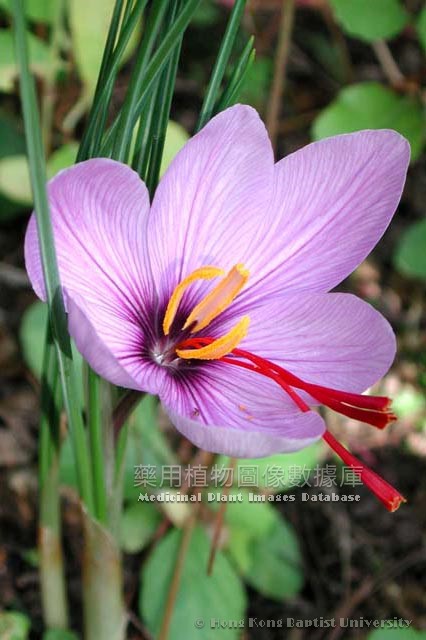
Crocus sativus L.
|
English Name |
Saffron, Saffron Crocus, Crocus |
|
Latin name |
Crocus sativus L. |
|
Family & Genus |
Iridaceae, Crocus |
|
Description |
Perennial herbs. Bulbs flat spherical, ranging in size, 0.5-10cm in diameter, with brown membranous scale leaves outside. 2-14 clusters borne from bulbs, each cluster with 2-13 pieces of leaves, base with 3-5 pieces of broad scales, sooty, leaves linear, 15-35cm long, 2-4mm wide, margin reflexed, with fine hairs. Flowers acrogenous; tepals 6, obovate, lavender, flower tubes thin tube-shaped; stamens 3, base of anthers arrow-shaped; ovary inferior, 3 chambers, style slender, yellow, stigmas 3, enlarged and funnel-shaped, extended outside of perianth tubes and drooping, dark red. Capsules oblong, with three blunt edges. Seeds numerous, spherical. Flowering: October to November. |
|
Distribution |
Growing in mountains of temperate zone. Distributed in Southwest and Northwest China, etc. The medicinal materials are mainly produced in Beijing, Shanghai, Zhejiang, Jiangsu and etc. |
|
Part Used |
Medical part: stigma. Chinese name: Xihonghua. |
|
Harvest & Processing |
Stored in ventilate, shady and dried places, kept in dark and airtight places. |
|
Chemistry |
Mainly contains crocin. |
|
Pharmacology |
Arresting pain, diminishing inflammation, analgesic, immunity-improving. |
|
Properties & Actions |
Sweet, neutral.Activating blood, dissipating stasis, cooling blood, detoxifying, dispelling melancholy and removing restlessness. |
|
Indications & Usage |
Used for menostasis and abdominal mass, blood stasis post partum, eruptions due to epidemic heat syndrome, melancholy and painful abdominal mass, terror and craziness.Oral administration: 3-9g. |
|
Examples |
Treat amenorrhea and abdominal pain, blood fainting due to regurgitation of blod after delivery: saffron, dried lotus leaves, suffruticosa peony bark, angelica, water cattail. |
| Link to |
 Chinese Medicinal Material Images Database
Chinese Medicine Specimen Database Chinese Medicinal Material Images Database
Chinese Medicine Specimen Database
|
|
Permanent URL:https://sys01.lib.hkbu.edu.hk/cmed/mpid/detail.php?herb_id=D00266 |
|
|
|


