|
Anemarrhena asphodeloides Bge.
|
English Name |
Anemarrhena, |
|
Latin name |
Anemarrhena asphodeloides Bge. |
|
Family & Genus |
Liliaceae, Anemarrhena |
|
Description |
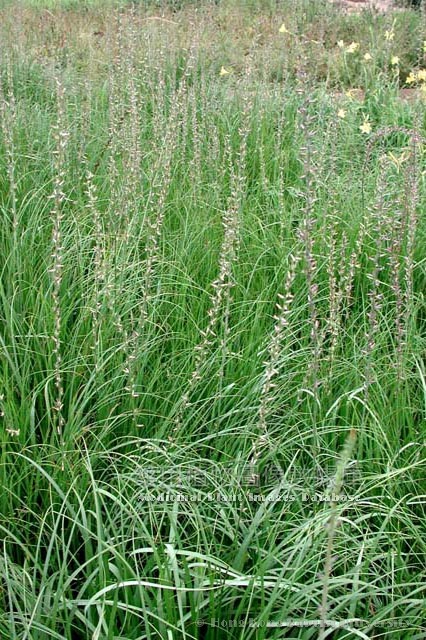
Perennial herbs. Whole plant glabrous. Rhizomes horizontal growing, stout, below numerous fleshy fibrous roots. Leaves basal, linear, 20-70cm long, 3-7cm wide, above green, glabrous, leaves base expanded and wrapping rhizomes. Scapes erect, none branched, up to 50-120cm, lower part with degenerative leaves, upper part with bracteoles; flowers 2-6 –clustered, long racemes, 20-40cm long; flowers yellow-white, most flower at night, with short stalk; tepals 6, base slightly joint, arranged in 2 layers, 5-8cm long, 1-1.5cm wide; upon maturation stamens 3, anthers yellow, degenerative stamens 3, no anthers; pistils 1, ovary 3-chambered, style short, stigma 1. Capsules ovate, 1-15mm long, diameter 5-7mm. Seeds long-ovate, ends acute, 8-12mm long, black. Flowering: May to August, fruiting: July to September. |
|
Distribution |
Growing in dank places of mountains. Distributed in Heilongjiang, Jilin, Liaoning, Inner Mongolia, Hebei, Henan, Shandong, Shaanxi, Gansu and etc. The medicinal materials are mainly produced in Hebei and Shanxi. Besides, also produced in Henan, Inner Mongolia, Gansu, Shaanxi and Northeast China. |
|
Part Used |
Medical part: roots. Chinese name: Zhimu. |
|
Harvest & Processing |
Excavated in spring and autumn, better in autumn. Harvested three years after cultivating. Excavated rhizome, removed fine roots and fibrous roots, keep yellow tomentum and light yellow leaf scars and stem scars, sun-dried to produce "Mao Zhimu"(Hairy Common Anemarrhena Rhizome). When fresh, scraped corkbark and sun-dried to produce "Guang Zhimu"(Glabrous Common Anemarrhena Rhizome). |
|
Chemistry |
Mainly contains saponins. |
|
Pharmacology |
Antifebrile, dryness-moistening, diuresis and reducing swell. |
|
Properties & Actions |
Bitter, cold.Nourishing Yin and reducing fire, moistening dryness and lubricating intestine. |
|
Indications & Usage |
Feverish dysphoria and diabetes, osteopyrexia, cough with lung heat, constipation, difficulty in urination.Internal: decocting, 10-25g; or made as pills or powders. Do not use if deficient cold of spleen and stomach or loose stool. |
|
Examples |
1. Treat pyreticosis due to exogenous pathogenic factor: Baihu Decoction.
2. Treat cold evil, internal exuberance of evil heat: baihua and ginseng decoction. |
| Link to |
 Chinese Medicinal Material Images Database
Phytochemical Image Database
Chinese Medicine Specimen Database Chinese Medicinal Material Images Database
Phytochemical Image Database
Chinese Medicine Specimen Database
|
|


