|
Trapa bispinosa Roxb.
|
English Name |
Waterchestnut, Singharanut |
|
Latin name |
Trapa bispinosa Roxb. |
|
Family & Genus |
Trapaceae, Trapa |
|
Description |
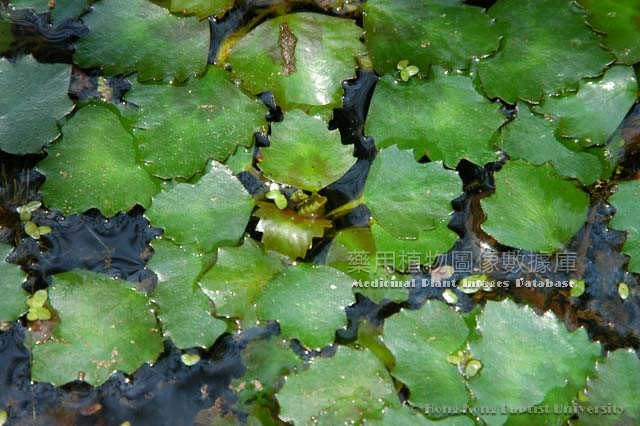
Annual hydrophilous herb. Leaf dimorphous; floating leaf aggregated on the top of stem, rosulate; petiole 5-10cm long, middle part expanded into a 1cm wide fungous air bag, covered with soft hairs; leaf triangular, 2-4cm long and wide, upper half part of margin with thick sawtooth, entire near basal part; upper surface green and hairless, vein of lower surface with hairs. Immersing leaf pinnately and thinly lobed. flower bisexual, white, solitary in leaf axil; calyx 4 deeply lobed, petals 4; stamen 4; ovary inferior, with 2 ventricles, style drill shaped, stigma head shaped, flower disc comb shaped. Nut invert triangular, spiny on both ends, the two spines 3-4cm away from each other. Flowering: June to July; fruiting: September to October. |
|
Distribution |
Growing in ponds, rivers, and marsh. Can be cultivated throughout China. |
|
Part Used |
Medical part: pulp. Chinese name: Ling. |
|
Harvest & Processing |
Collected in August-Sept, used fresh or sundried. |
|
Pharmacology |
Anticancer. |
|
Properties & Actions |
Sweet, cool.Invigorating spleen and stomach, relieving restlessness and quenching thirst and detoxifying. |
|
Indications & Usage |
Splenasthenic diarrhea, thirst due to summer heat, diabetes, insobriety, dysentery.Oral administration: decocting, 9-15g, large dosage up to 60g; or raw eaten. Used raw for clearing summer-heat, and polydipsia; cooked for nourishing spleen and stomach. Those with deficient-cold in spleen and stomach or qi stagnation in middle jiao should avoid using. |
|
Examples |
Esophageal carcinoma: waterchestnut fruit, wistaria, medicinal terminalia, coix seed 9g each. Decoct and swallow. |
|
Permanent URL:https://sys01.lib.hkbu.edu.hk/cmed/mpid/detail.php?herb_id=D01041 |
|
|


